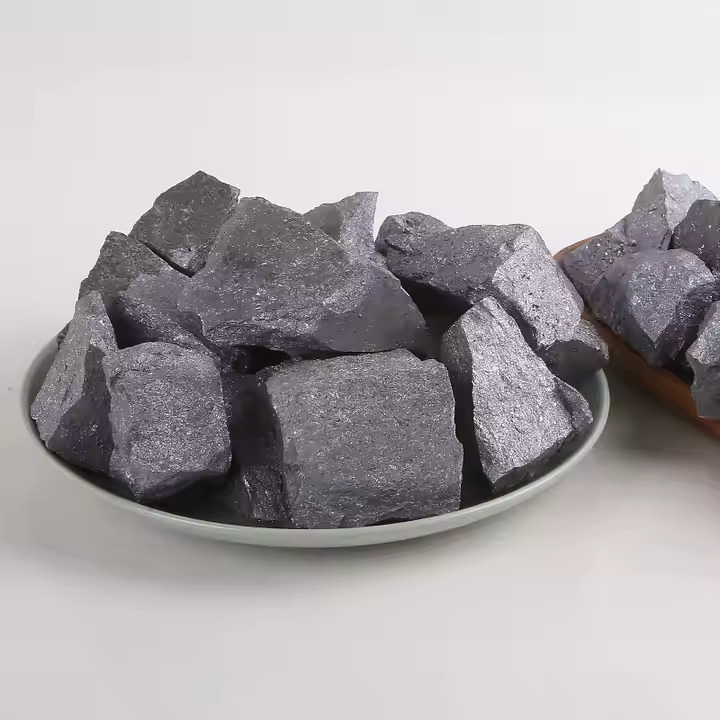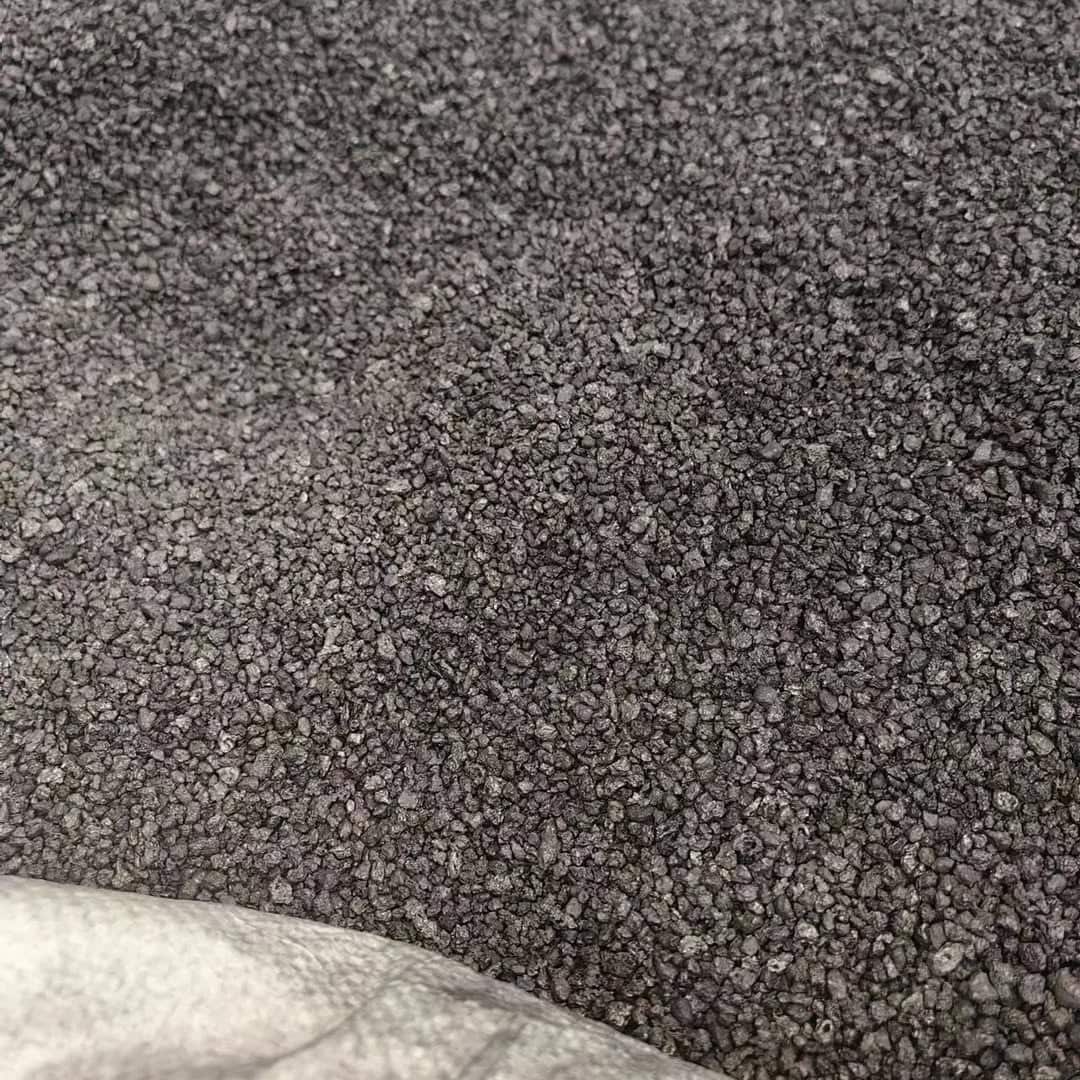


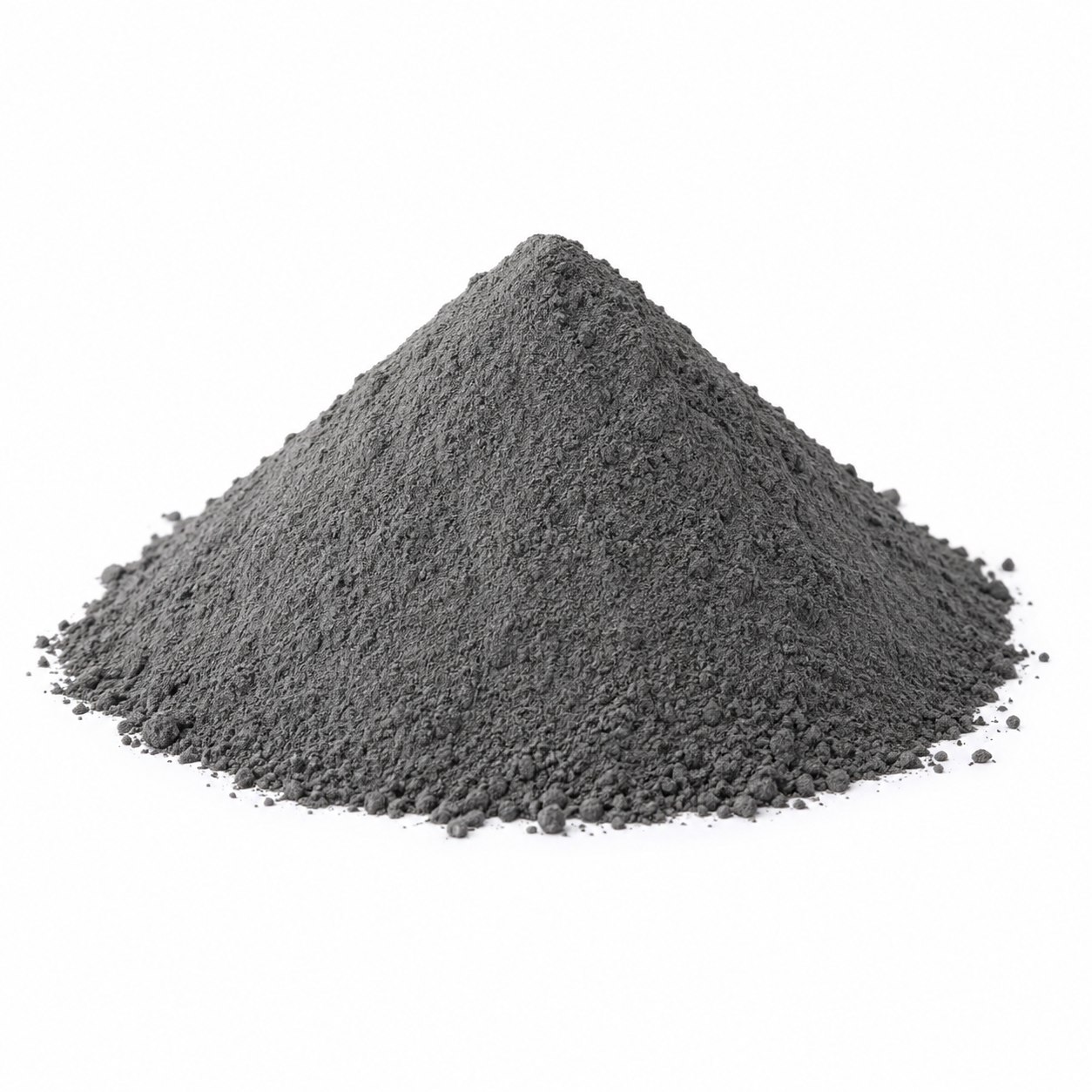
:Silica Fume (Microsilica) in Concrete
Silica fume, also known as microsilica, is an ultra-fine amorphous silicon dioxide (SiO2) used in concrete to improve strength, durability, and resistance to permeability
As a highly reactive pozzolanic material, it reacts with calcium hydroxide during cement hydration to form additional calcium silicate hydrate , which increases concrete density and mechanical performance
Its very fine particles also fill microscopic voids in the cement matrix, reducing water penetration, chloride ingress, sulfate attack, and reinforcement corrosion
Silica fume is widely used in high-performance concrete, high-strength concrete, marine structures, bridges, tunnels, shotcrete, and precast elements
For best results, it is commonly used with superplasticizers and should meet standards such as ASTM C1240 and EN 13263
Global producer and supplier for Eurasian countries: ferrosilicon.co
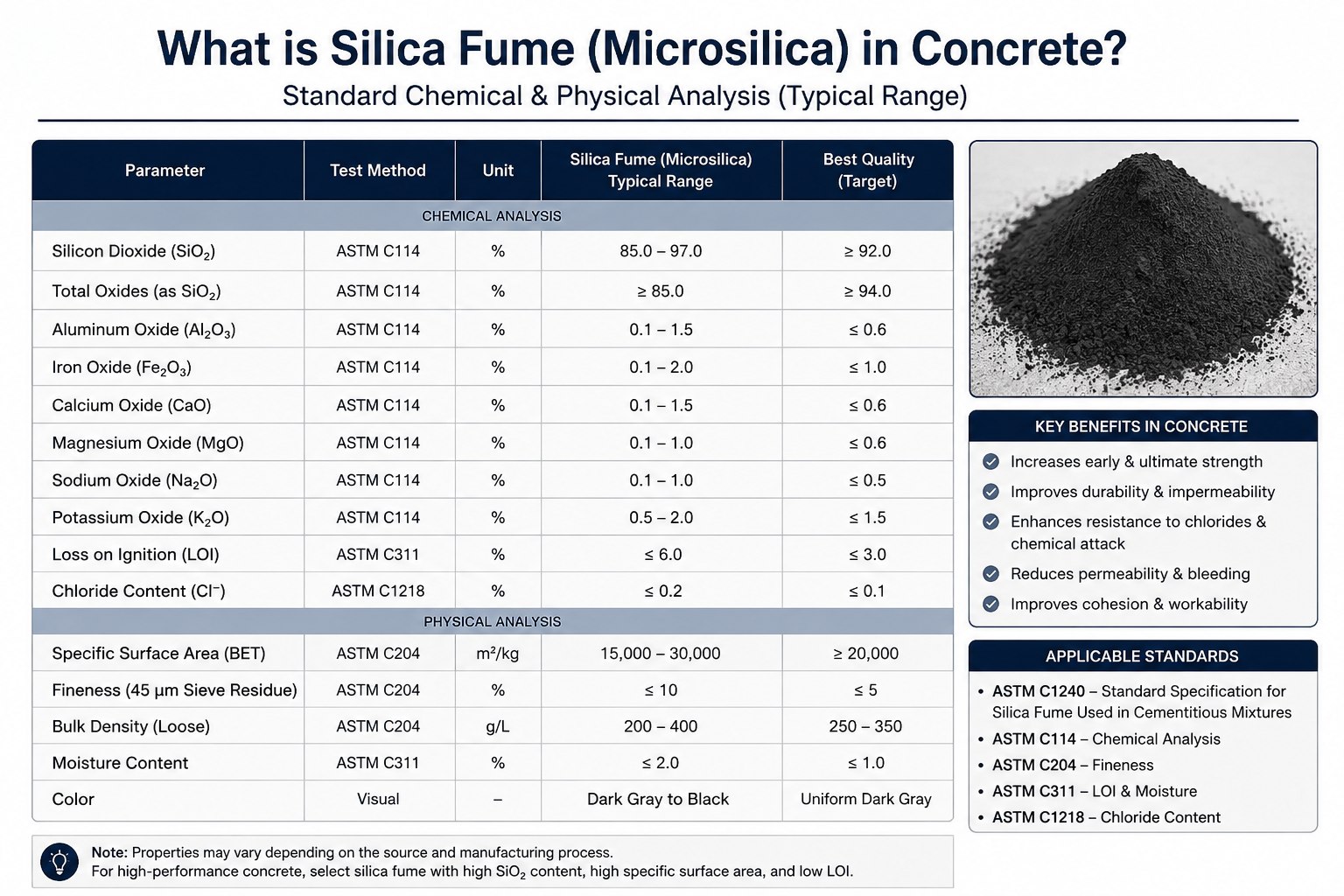
?What Is Silica Fume (Microsilica) in Concrete
Silica fume, or microsilica, is an ultra-fine supplementary cementitious material mainly composed of amorphous silicon dioxide (SiO2)
It is produced as a by-product of silicon metal and ferrosilicon alloy manufacturing. In concrete, silica fume reacts with calcium hydroxide (Ca(OH)2) to form additional calcium silicate hydrate (C-S-H), which improves strength and density
Its fine particles also fill microscopic voids in the cement matrix, reducing permeability and increasing durability. Silica fume is widely used in high-performance concrete, marine structures, bridges, tunnels, shotcrete, and precast concrete
?How Silica Fume Improves Concrete Performance
Silica fume enhances concrete performance by modifying both the microstructure and the hydration chemistry of the cementitious system
As a highly reactive pozzolanic material, it reacts with calcium hydroxide (Ca(OH)2) released during cement hydration and generates additional calcium silicate hydrate (C-S-H), which is the primary phase responsible for strength and matrix cohesion
At the same time, its ultra-fine particles fill capillary voids and weak zones within the paste, particularly in the interfacial transition zone ITZ between cement paste and aggregate
This densification leads to lower permeability, reduced porosity, and improved mechanical integrity
As a result, silica fume concrete typically shows higher compressive strength, better abrasion resistance, and greater durability against chloride ingress, sulfate exposure, moisture penetration, and steel reinforcement corrosion
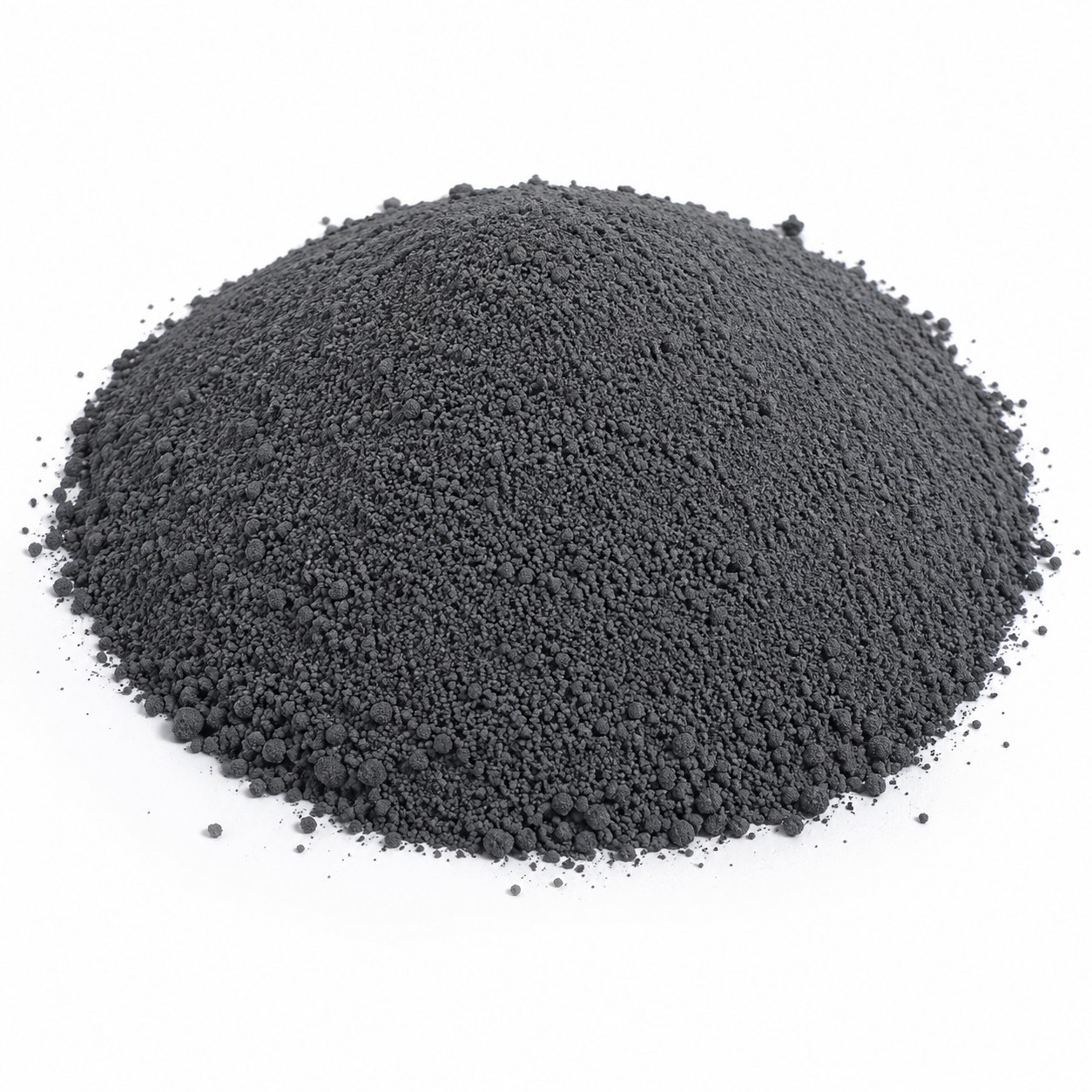
:Chemical Composition and Physical Properties of Silica Fume
Silica fume, also known as microsilica, is mainly composed of amorphous silicon dioxide (SiO2) and contains very fine spherical particles formed during the production of silicon metal or ferrosilicon alloys
Its chemical purity, particle fineness, high surface area, and pozzolanic activity are the main factors that define its performance in concrete. A high-quality silica fume improves cement hydration products, refines pore structure, and increases the durability of concrete exposed to aggressive environments
| Parameter | Typical Description | Role in Concrete |
|---|---|---|
| Main Composition | Amorphous silica | Supports pozzolanic reaction |
| Particle Form | Very fine, spherical particles | Improves packing density |
| Fineness | Much finer than cement | Fills micro-voids in the paste |
| Surface Activity | Very high | Enhances binder reaction |
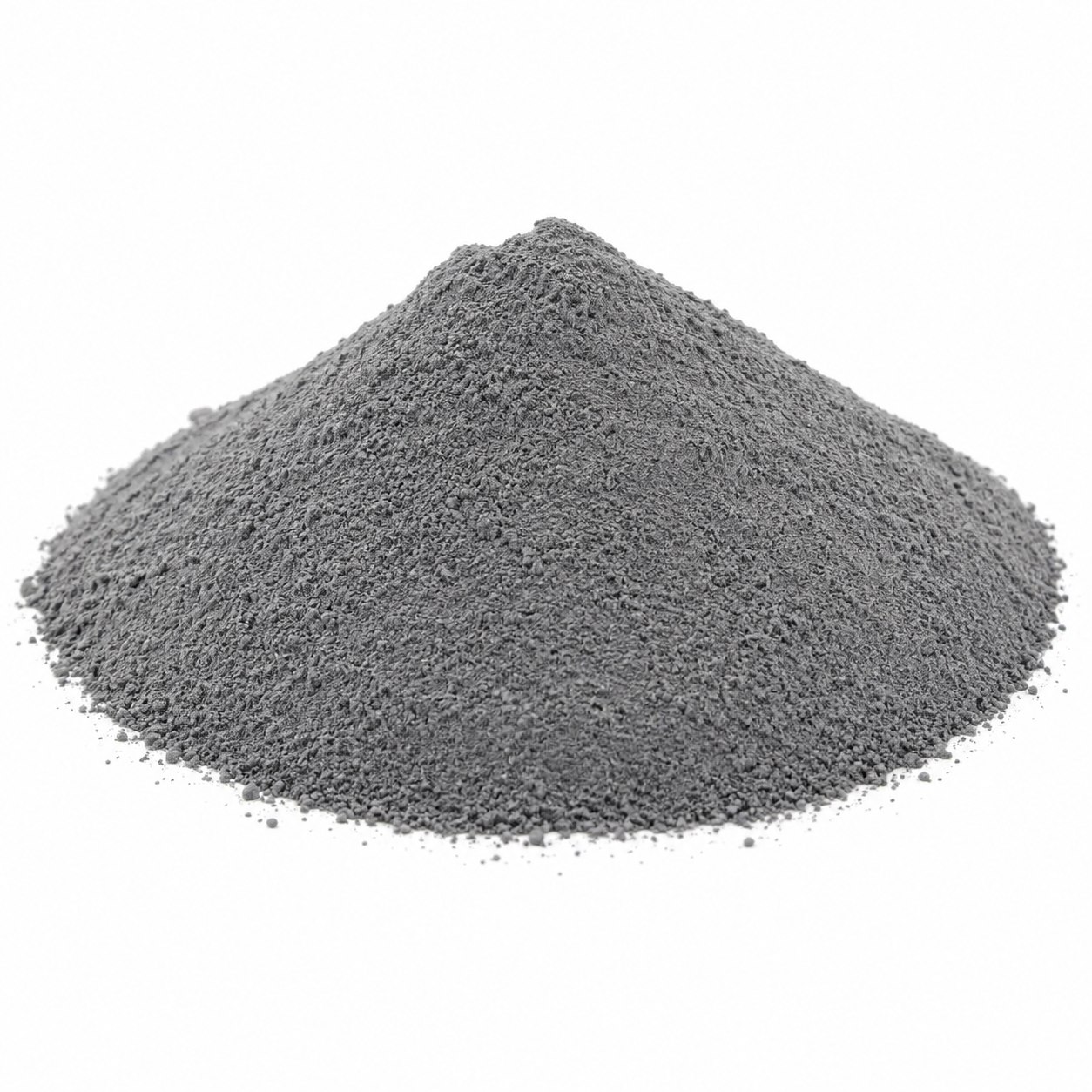
| Color | Light to dark gray | Depends on source and carbon level |
| Moisture Level | Low | Helps stable storage and batching |
| Reactivity | High pozzolanic activity | Forms additional binding gel |
| Standard Quality | ASTM C1240 / EN 13263 | Ensures reliable concrete performance |
:Benefits of Using Microsilica in High-Performance Concrete
✅ Higher Compressive Strength
Microsilica increases concrete strength by forming additional binding gel and creating a denser cement matrix
🛡️ Improved Durability
It reduces concrete porosity and helps the structure resist long-term deterioration in harsh environments
💧 Lower Water Permeability
The ultra-fine particles fill microscopic voids, making concrete less permeable to water and moisture
🧂 Better Chloride Resistance
Microsilica limits chloride ion penetration, helping protect steel reinforcement from corrosion
🌊 Excellent Performance in Marine Structures
It is highly effective for ports, bridges, seawalls, and offshore concrete exposed to seawater
🧱 Stronger Interfacial Transition Zone
Microsilica improves the bond between cement paste and aggregates, reducing weak zones inside concrete
⚙️ Higher Abrasion Resistance
It improves surface hardness, making concrete suitable for industrial floors, pavements, and heavy-duty areas
:Applications of Silica Fume Concrete in Construction
Silica fume concrete is used in projects that require high strength, low permeability, and long service life
Its dense microstructure makes it suitable for structures exposed to moisture, chlorides, chemicals, and abrasion
Marine Structures: ports, seawalls, piers, and offshore concrete exposed to seawater
Bridges and Roads: bridge decks, piers, tunnels, and highway structures requiring corrosion resistance
High-Rise Buildings: columns, cores, and structural elements needing high compressive strength
Tunnels and Underground Works: tunnel linings, metro systems, basements, and water-retaining structures
Industrial Floors: factories, warehouses, pavements, and heavy-duty traffic areas
Shotcrete Applications: tunnel support, slope stabilization, mining, and repair works
Precast Concrete: beams, panels, piles, pipes, and other durable precast elements
:Silica Fume vs Other Supplementary Cementitious Materials
Silica fume is much finer and more reactive than most supplementary cementitious materials such as fly ash or slag
It produces a denser concrete matrix, higher early strength, and lower permeability. However, it usually increases water demand more than other SCMs, so it is often used with superplasticizers
Compared with fly ash, silica fume is better for high-performance and high-durability concrete, especially where resistance to chloride penetration and abrasion is critical
:Frequently Asked Questions
?What is silica fume used for in concrete
Silica fume is used to increase concrete strength, reduce permeability, and improve durability against chloride penetration, sulfate attack, moisture ingress, and reinforcement corrosion
?Is silica fume the same as microsilica
Yes. Silica fume and microsilica refer to the same ultra-fine pozzolanic material mainly composed of amorphous silica
?How does silica fume improve concrete strength
It reacts with calcium hydroxide from cement hydration and forms additional binding gel, while its fine particles fill micro-voids in the cement matrix
?Where is silica fume concrete commonly used
It is commonly used in marine structures, bridges, tunnels, high-rise buildings, industrial
:Conclusion
Silica fume plays a key role in producing stronger, denser, and more durable concrete. Its ultra-fine particles and high pozzolanic reactivity improve the cement matrix, reduce permeability, and increase resistance to aggressive agents such as chlorides, sulfates, moisture, and abrasion
This makes microsilica an excellent choice for high-performance concrete, marine structures, bridges, tunnels, industrial floors, shotcrete, and precast elements. With proper mix design and compliance with standards such as ASTM C1240 and EN 13263, silica fume can significantly extend the service life and reliability of concrete structures