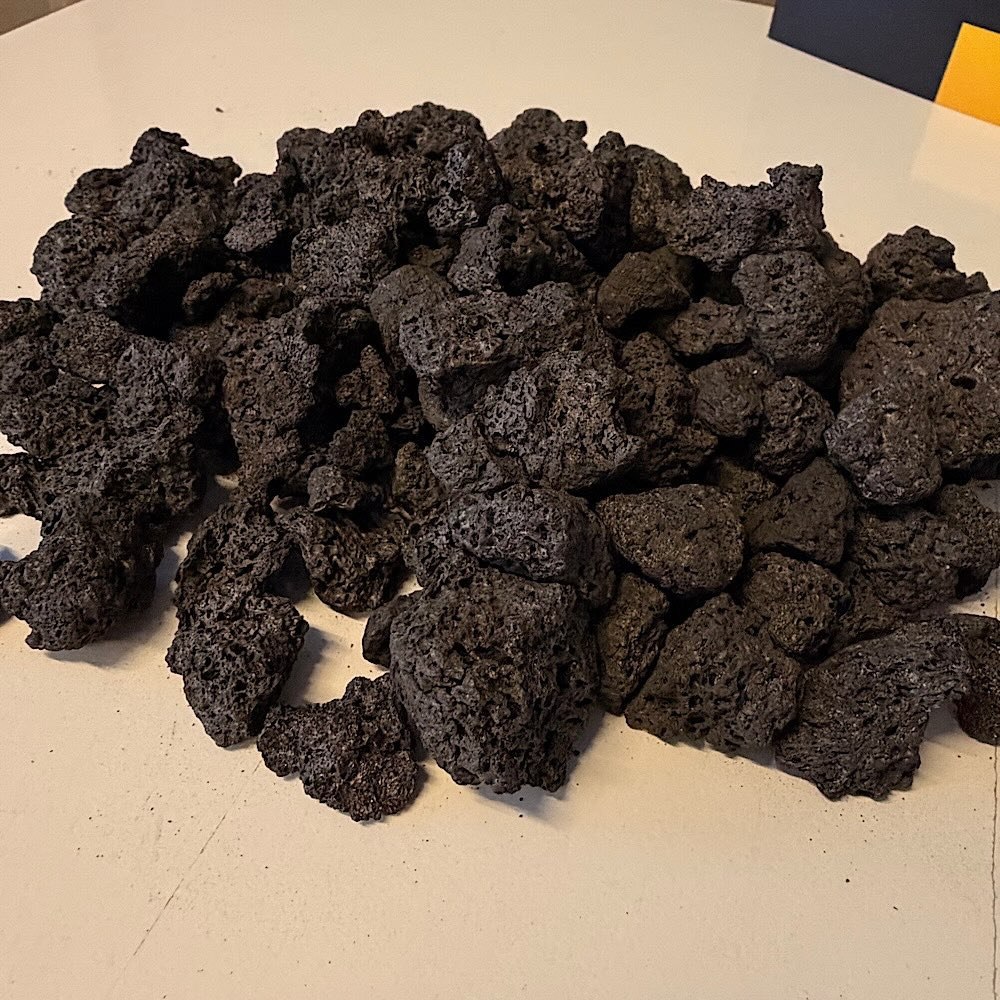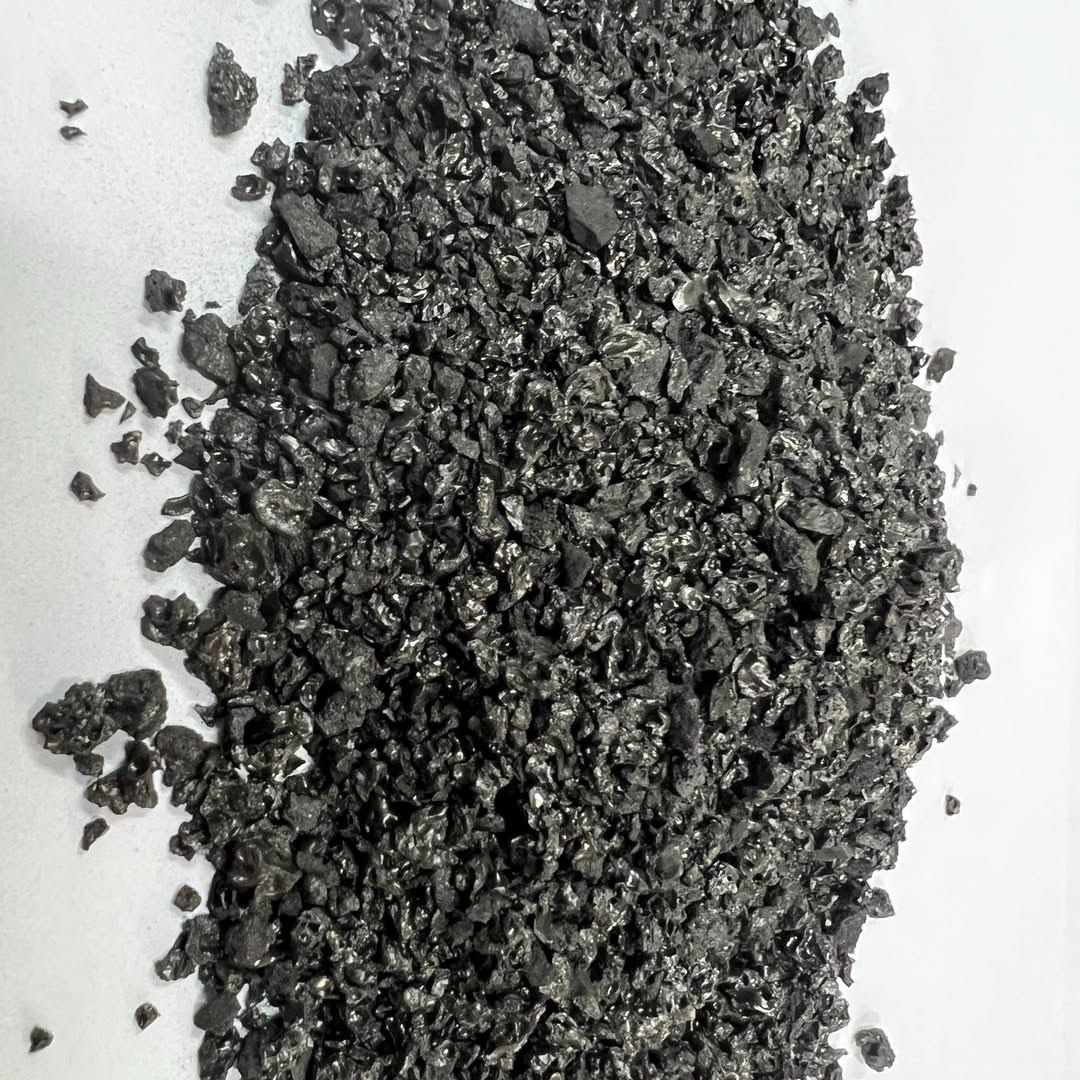


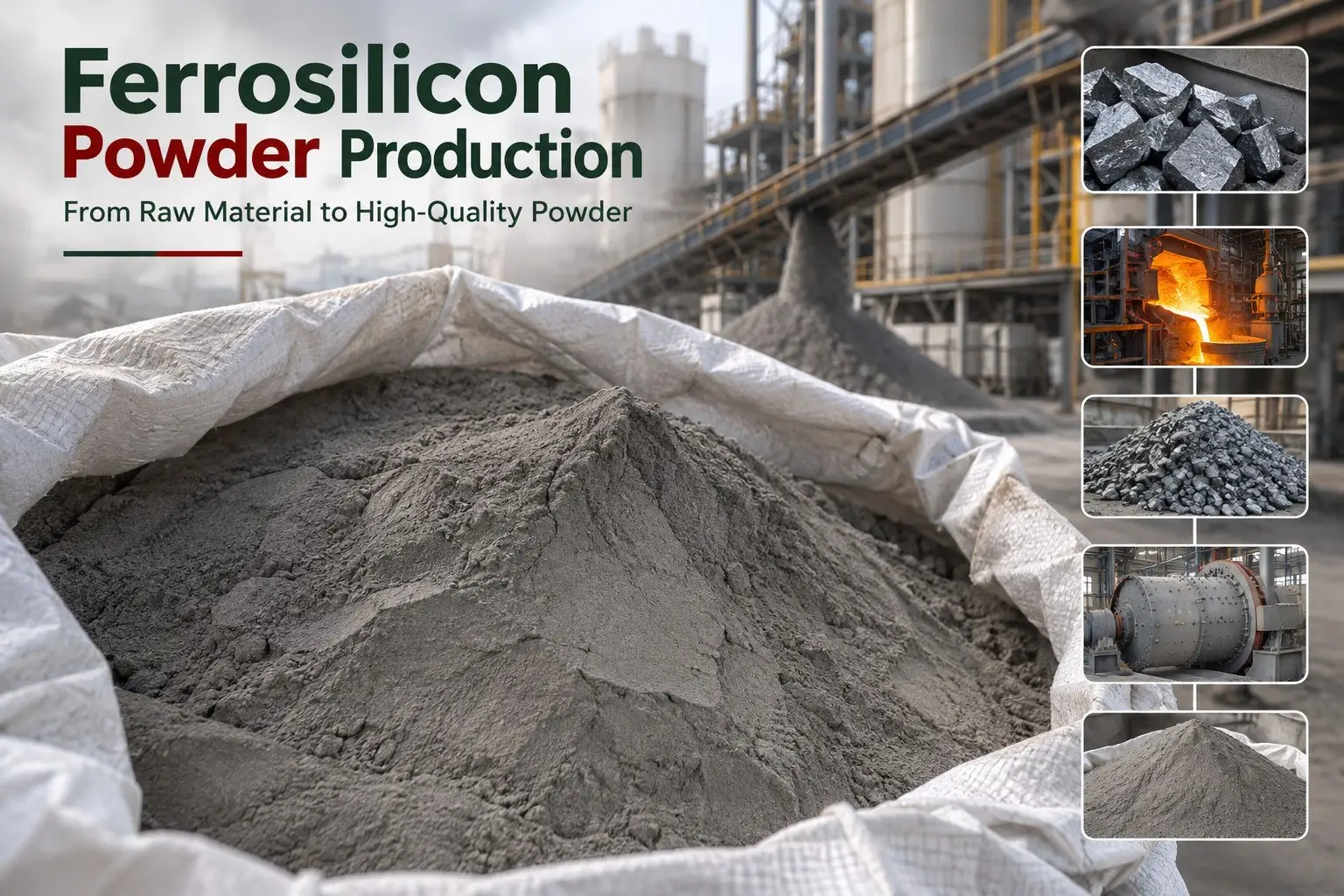
Ferrosilicon powder production converts an iron-silicon alloy into a controlled particulate material for dense media separation, welding consumables, foundry operations and other metallurgical applications. The main production routes are mechanical crushing and milling or atomization of molten alloy. The correct route depends on chemistry, particle size distribution, particle shape and the requirements of the end use.
In This Article — 10 Main Sections
- Ferrosilicon Powder at a Glance
- What Is Ferrosilicon Powder?
- How Is Ferrosilicon Powder Produced?
- Milled vs. Atomized Ferrosilicon Powder
- Particle Size, Chemistry and PSD
- Industrial Applications of Ferrosilicon Powder
- Quality Control, Packaging and Storage
- How to Select Ferrosilicon Powder and Request a Quote
- Frequently Asked Questions
- Conclusion: Specify the Powder, Not Just the Name
Ferrosilicon Powder at a Glance
Expand the product overview
Important: FeSi 15% DMS is a low-silicon ferrosilicon product intended for dense-medium service. It is not interchangeable with conventional high-silicon ferrosilicon powder. Confirm chemistry and particle-size limits against the batch specification.
What Is Ferrosilicon Powder?
Ferrosilicon is an iron-silicon alloy. In powder form, it consists of particles produced either by breaking down solid alloy or by atomizing molten alloy into droplets that cool and solidify. The material is selected when the combined chemical and physical properties of ferrosilicon are useful in an industrial process.
Four properties should be considered separately: chemical composition describes the alloy; particle-size distribution describes the range of particle sizes; morphology describes particle shape; and density describes mass per unit volume under a stated measurement condition. A mesh designation is a sieve-related size class, not a chemical grade or density value.
How Is Ferrosilicon Powder Produced?
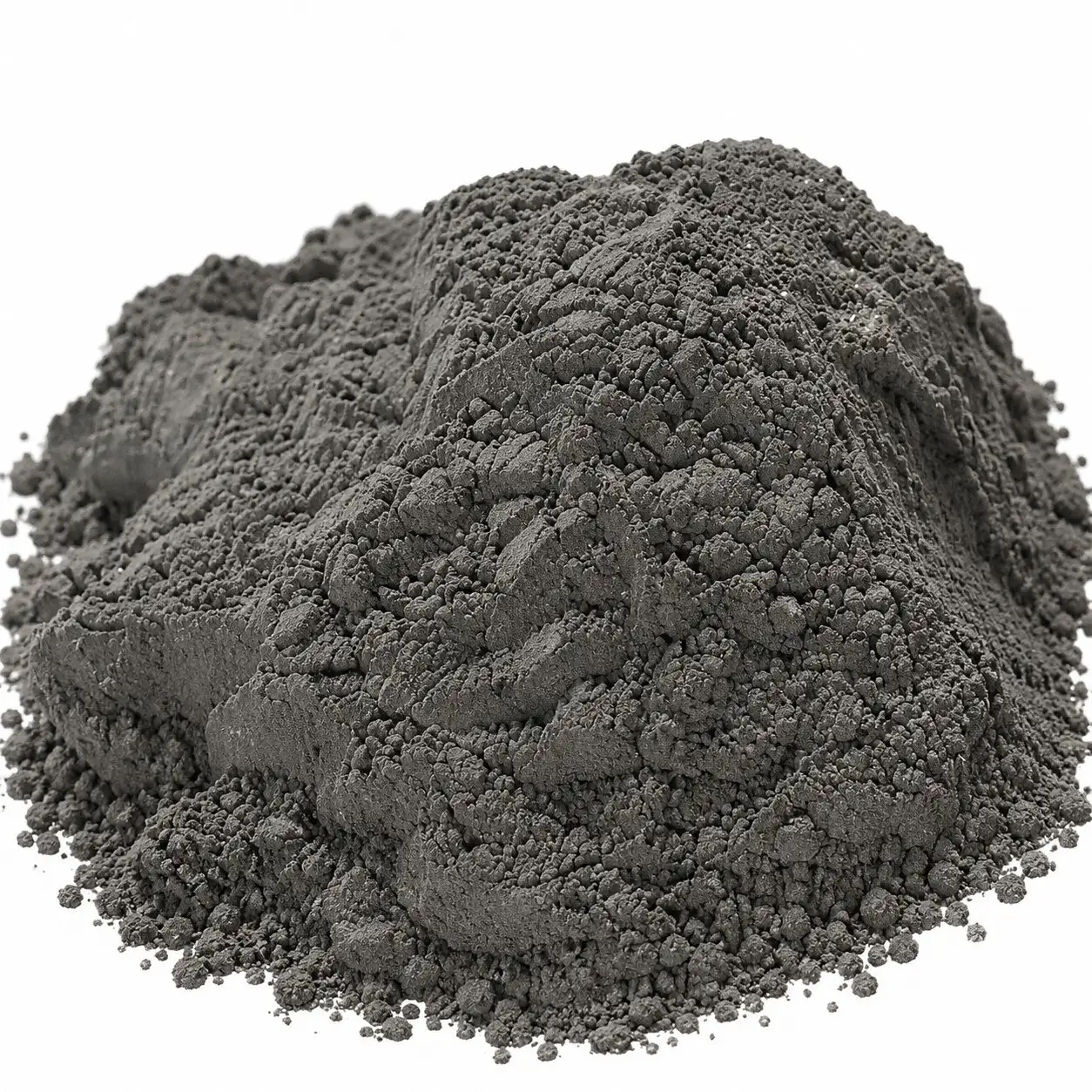
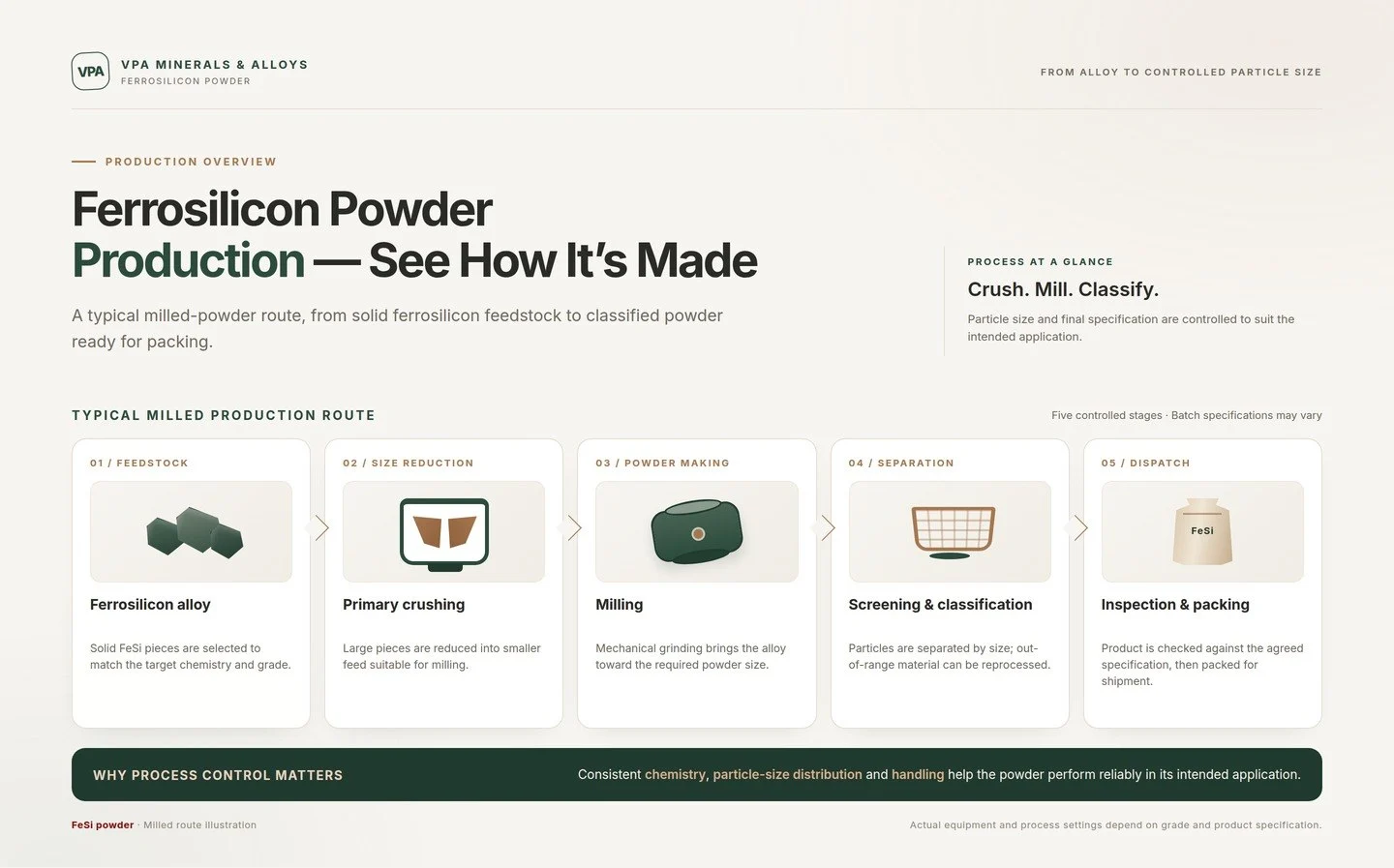
There is no single production sequence for every ferrosilicon powder. In the mechanical route, solid alloy is inspected, crushed, milled and classified to meet the required size range. In the atomized route, molten alloy is dispersed into droplets by a gas or liquid stream; the droplets cool and solidify before collection and classification.
Ferrosilicon Powder Production Process
Illustrative mechanical route: alloy feedstock → crushing → milling → screening → finished powder. Actual plant layouts and equipment sequences vary by specification.
Typical Production Stages
The table below summarizes a common mechanical production workflow. Atomized powder follows a different route after the alloy is melted, so the crushing and milling stages do not apply in the same way.
| Step | Production Stage | Description |
|---|---|---|
| 01 | Feedstock Selection | Select ferrosilicon alloy suitable for the required chemistry and application. |
| 02 | Raw-Material Inspection | Verify supplier documentation, alloy identity, visible contamination and representative chemistry. |
| 03 | Primary Crushing | Break larger alloy pieces into manageable fragments using suitable crushing equipment. |
| 04 | Secondary Crushing | Reduce fragments to a size suitable for the selected mill or downstream process. |
| 05 | Milling and Grinding | Apply controlled mechanical energy to produce the target fine fraction; equipment choice affects particle shape and fines generation. |
| 06 | Classification | Separate particles by aerodynamic, mechanical or another suitable classification method. |
| 07 | Screening | Use specified sieve cuts to remove oversize material or divide the product into size fractions. |
| 08 | PSD Inspection | Measure particle-size distribution using an agreed method and report the required percentiles or sieve fractions. |
| 09 | Quality Control | Check chemistry, physical properties, contamination and batch conformity against the purchase specification. |
| 10 | Final Packaging | Pack in clean, identified and moisture-protected packaging suitable for storage and transport. |
These stages describe a process framework, not a universal plant sequence. The exact equipment, number of crushing stages and classification strategy depend on the product specification and manufacturing route.
Milled vs. Atomized Ferrosilicon Powder
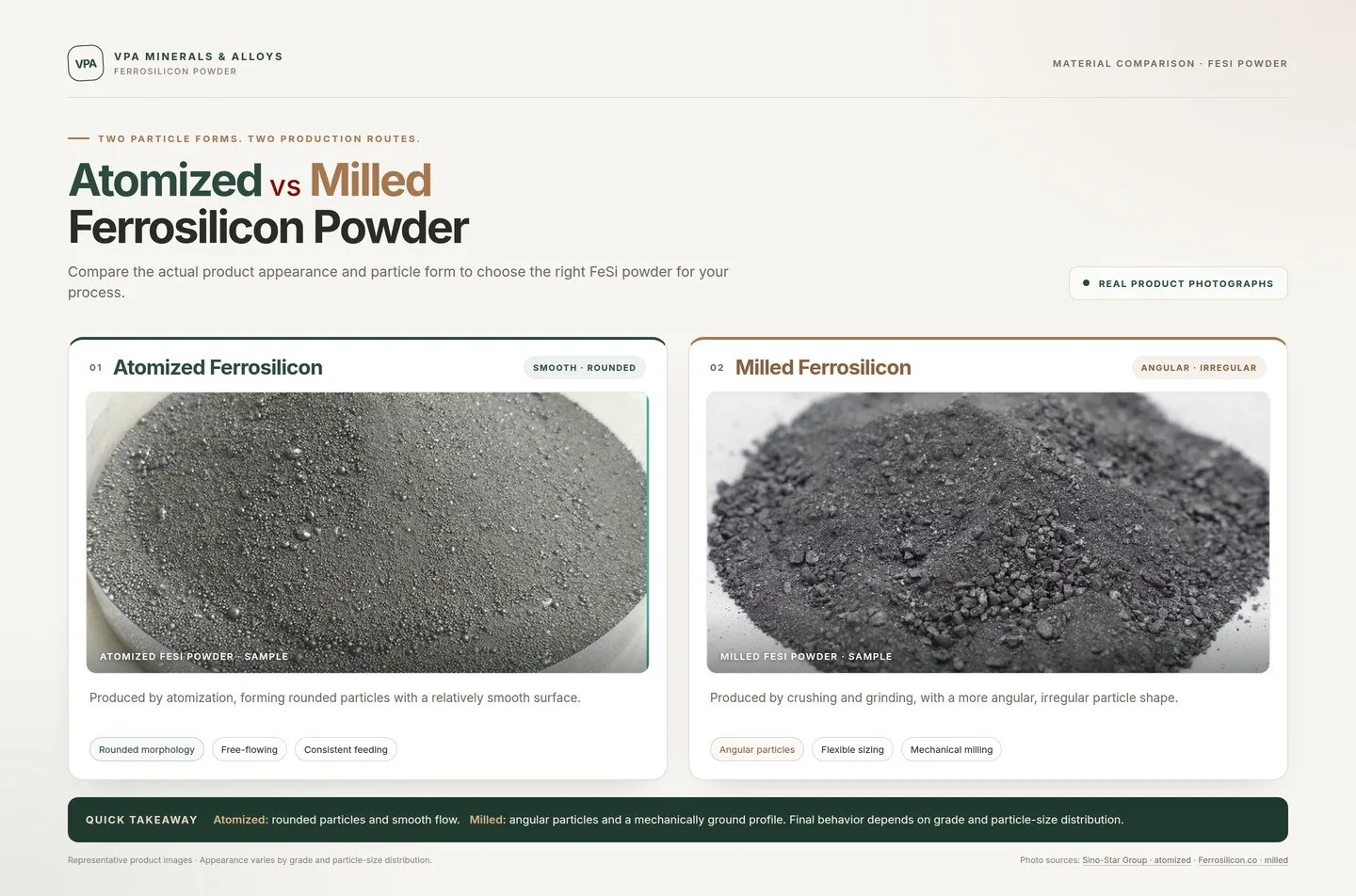
Milled powder is produced by mechanically breaking solid ferrosilicon. The resulting particles are often angular or irregular. Atomized powder is produced by dispersing molten alloy into droplets that solidify during cooling; particles are often more rounded. These are typical tendencies, not guarantees for every product.
| Property | Milled Powder | Atomized Powder |
|---|---|---|
| Feed material | Solid ferrosilicon alloy | Molten ferrosilicon alloy |
| Production route | Crushing, milling and classification | Droplet formation, cooling and classification |
| Typical morphology | Angular or irregular particles | Often rounded or spherical particles |
| Process controls | Mill settings, contamination, fines and classification cut | Atomization conditions, cooling, collection and classification |
| Final specification | Both routes require agreed chemistry, PSD, morphology limits where relevant, inspection and batch documentation. | |
Neither route is automatically better for every application. Selection should be based on the required particle characteristics, downstream process performance, technical qualification and total delivered cost.
Particle Size, Chemistry and PSD
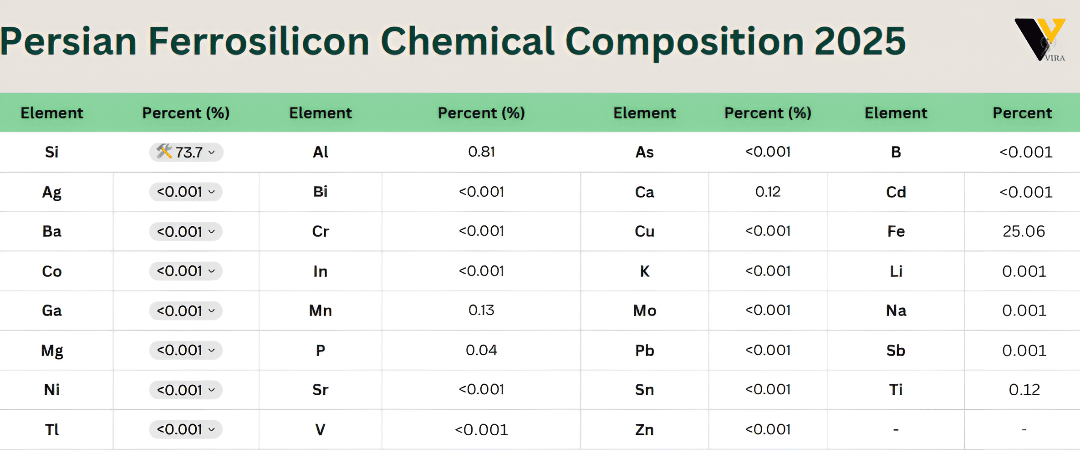
Particle size and chemical composition must be specified independently. Chemistry is commonly reported as mass percentages. Silicon content is a major grade parameter, while iron forms the balance together with other alloying and residual elements. Limits for aluminium, calcium, carbon, phosphorus, sulphur and other elements should be stated in the purchase specification.
Particle size may be reported in micrometres (micrometres), millimetres, sieve fractions or mesh designations. One millimetre equals 1,000 micrometres. Mesh-to-micrometre conversions depend on the sieve series and wire geometry, so the two labels should not be treated as perfectly interchangeable.
- D10: the diameter below which 10% of the reported distribution lies.
- D50: the median diameter; 50% of the reported distribution lies below this value.
- D90: the diameter below which 90% of the reported distribution lies.
For example, a report showing D10 = 8 micrometres, D50 = 28 micrometres and D90 = 62 micrometres describes a distribution with a median of 28 micrometres. These values are illustrative only and are not a product specification.
A PSD report should identify whether the result is volume-, number- or mass-based and state the instrument, dispersion procedure and test method. A nominal 0–45 micrometres upper-cut description is not equivalent to a D50 of 45 micrometres: one is a size-range limit, while the other is a percentile value.
Do not infer chemistry from particle size, density, colour or product name. Request a batch-specific Certificate of Analysis (CoA), and agree the analytical method and acceptance tolerances before ordering.
Industrial Applications of Ferrosilicon Powder
Dense Media Separation
Dense Media Separation (DMS) uses a suspension of dense particles in water to create a medium with a controlled density. Particles less dense than the medium tend to float, while denser particles tend to sink. Ferrosilicon is used in some DMS circuits because of its density and magnetic recoverability.
For DMS service, the complete specification matters: chemistry, particle density, PSD, particle shape and magnetic properties can all influence medium behaviour. Excessive fines may affect viscosity, while coarse particles may settle more quickly. A purpose-selected FeSi 15 DMS grade should not be confused with conventional high-silicon ferrosilicon powder.
Welding Electrode Manufacturing
Some welding-electrode covering formulations use ferrosilicon as a silicon-bearing ingredient. Chemistry affects its intended metallurgical contribution, while particle size and PSD influence blending, coating consistency and handling. The grade must meet the formulation's chemistry, moisture and particle-size requirements.
Foundry and Metallurgical Processes
Ferrosilicon is used as a silicon-bearing ferroalloy in iron and steelmaking and in foundry practice. Whether a powder is suitable depends on the addition method, recovery requirements, dust control and dissolution behaviour. Powder should not be substituted for lump or granular material without process validation.
Quality Control, Packaging and Storage
A reliable quality plan links each finished batch to its raw material, production route and test results. Depending on the application and contract, inspection may include:
- Chemical analysis: silicon and specified impurity elements using an agreed laboratory method.
- Particle-size analysis: sieve analysis for defined size cuts and/or laser diffraction for fine PSD reporting.
- Morphology checks: visual or microscopic examination when particle shape is important.
- Physical properties: density, flow or other application-specific tests where required.
- Contamination and moisture: checks appropriate to the alloy, process and packaging specification.
- Traceability: lot number, sampling record, test date, method and certificate linked to the shipment.
Buyers should request a representative batch CoA, PSD report, test-method details and clearly defined acceptance limits. If independent inspection is required, agree the inspection agency, sampling point and dispute procedure in the purchase contract.
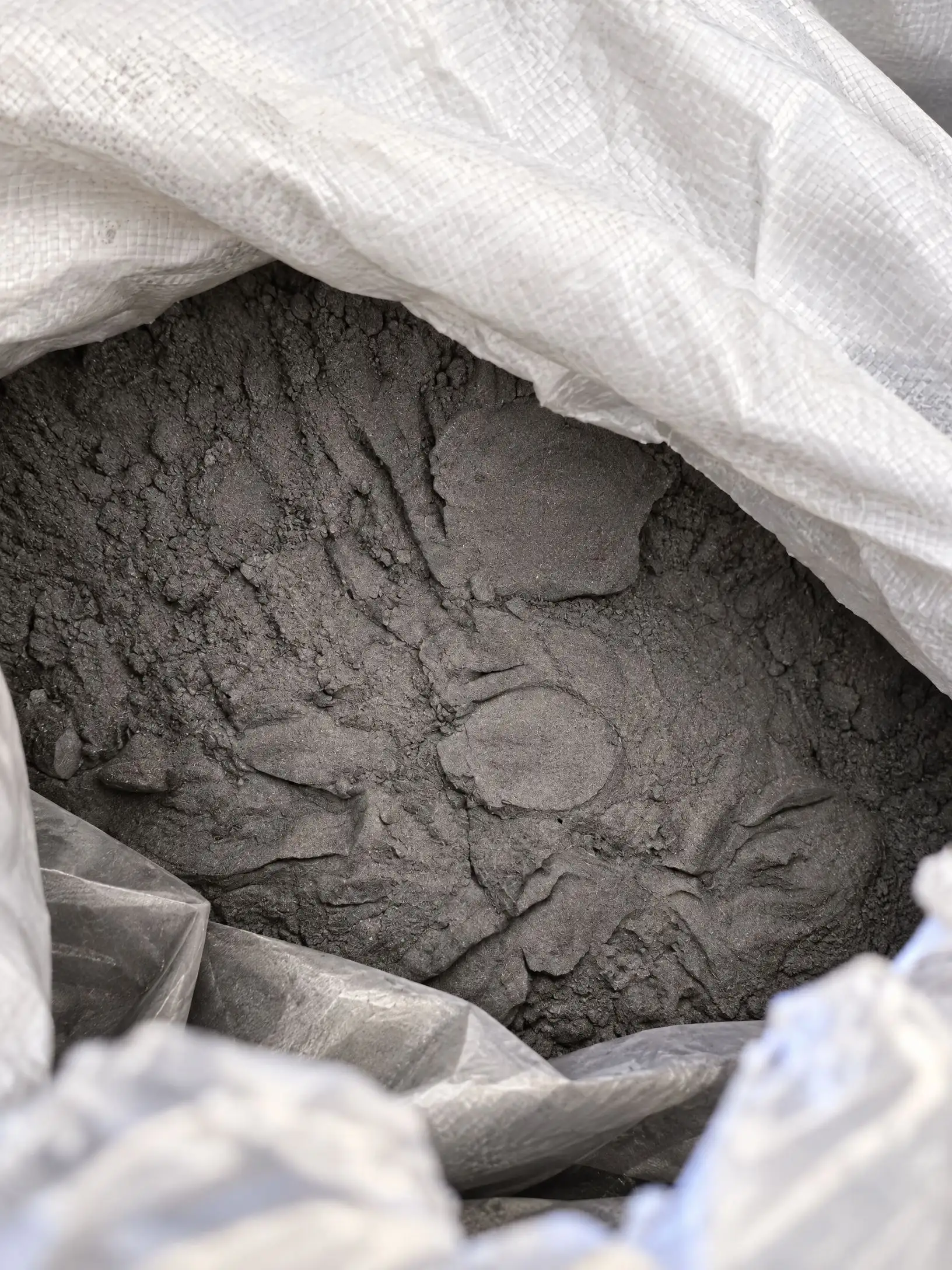
Ferrosilicon powder should be packed in clean, sealed packaging selected to protect it from moisture, contamination and loss during handling. Depending on the order, packaging may include lined bags, multiwall bags or bulk bags. Store packages in a dry, covered area, off the floor and away from water ingress. Keep packages closed after sampling and follow suitable dust-control and handling procedures.
How to Select Ferrosilicon Powder and Request a Quote
A technically comparable purchase specification should identify the application and define both chemical and physical requirements. Before requesting an offer, confirm the following points:
- Define the application and process equipment, such as a DMS cyclone, static bath, electrode formulation or foundry addition.
- Specify silicon content and all controlled impurity limits independently from particle size.
- Set sieve limits and/or D10, D50 and D90 values, and state the required test method.
- Identify whether milled or atomized powder is preferred, then verify suitability by sample testing or a plant trial.
- Agree packaging, moisture protection, batch quantity, delivery destination and documentation.
Ferrosilicon powder price depends on chemistry, raw-material market conditions, production route, fineness, PSD tolerances, classification yield, order quantity, packaging, inspection, freight and delivery terms. Compare offers only when the technical specifications and commercial terms match. A lower price for a different chemistry or broader PSD is not an equivalent offer.
Product information is available for milled ferrosilicon powder, atomized ferrosilicon powder and Si 45 ferrosilicon powder. Confirm current availability, exact chemistry, PSD and supply terms directly for the requested order.
Frequently Asked Questions
What is ferrosilicon powder?
It is particulate iron-silicon alloy produced by crushing and milling solid alloy or by atomizing molten alloy. Chemistry and PSD must be specified separately.
What is the difference between milled and atomized powder?
Milled powder is formed by breaking solid alloy and is often angular. Atomized powder forms from molten droplets and is often more rounded. Actual morphology depends on process conditions.
What do D10, D50 and D90 mean?
They are cumulative particle-size percentiles. They indicate the diameters below which 10%, 50% and 90% of the reported distribution lie. The report should state its measurement basis.
Is 0–45 micrometres the same as D50 = 45 micrometres?
No. A 0–45 micrometres description generally refers to a nominal size range or upper cut. D50 is the median particle diameter of the reported distribution.
What is FeSi 15% DMS powder?
It is a low-silicon ferrosilicon grade intended for dense-medium separation. Confirm the exact chemistry and PSD from the current product specification and batch CoA.
What documents should buyers request?
Request a batch Certificate of Analysis, PSD report, test-method details, traceability information, packaging details and any agreed inspection documents.
What affects ferrosilicon powder price?
Chemistry, raw-material prices, production route, particle size, PSD tolerances, yield, quantity, packaging, inspection, freight and delivery terms all influence the offer.
How should ferrosilicon powder be stored?
Keep sealed packages dry, covered, off the floor and protected from water ingress and contamination. Follow the supplier's handling and dust-control instructions.
Conclusion: Specify the Powder, Not Just the Name
Ferrosilicon powder production combines alloy selection, crushing and milling or atomization, classification and quality control. The most suitable product is determined by its application and by a complete specification covering chemistry, particle-size distribution, morphology, packaging and documentation.
For a technically comparable quotation, provide the intended application, target chemistry, PSD or sieve limits, preferred production route, quantity, packaging and delivery destination. Contact Vira Pars Alloy to request a quotation and confirm the current product specification and supply terms.
Technical References