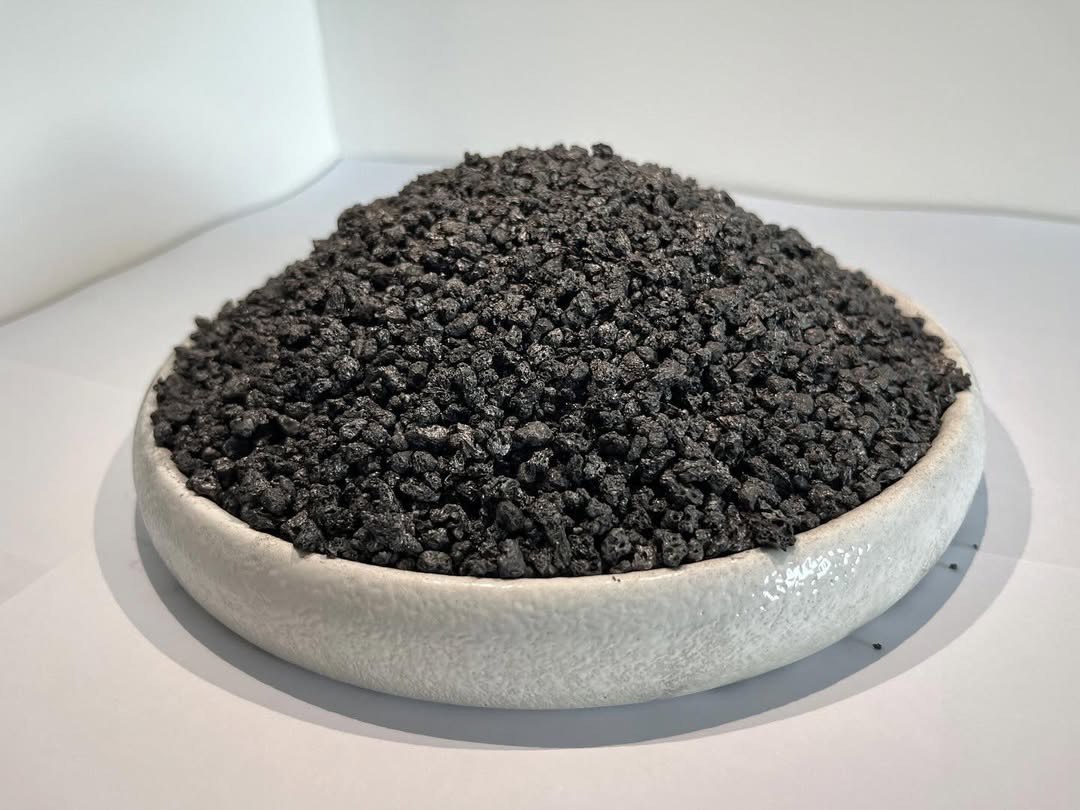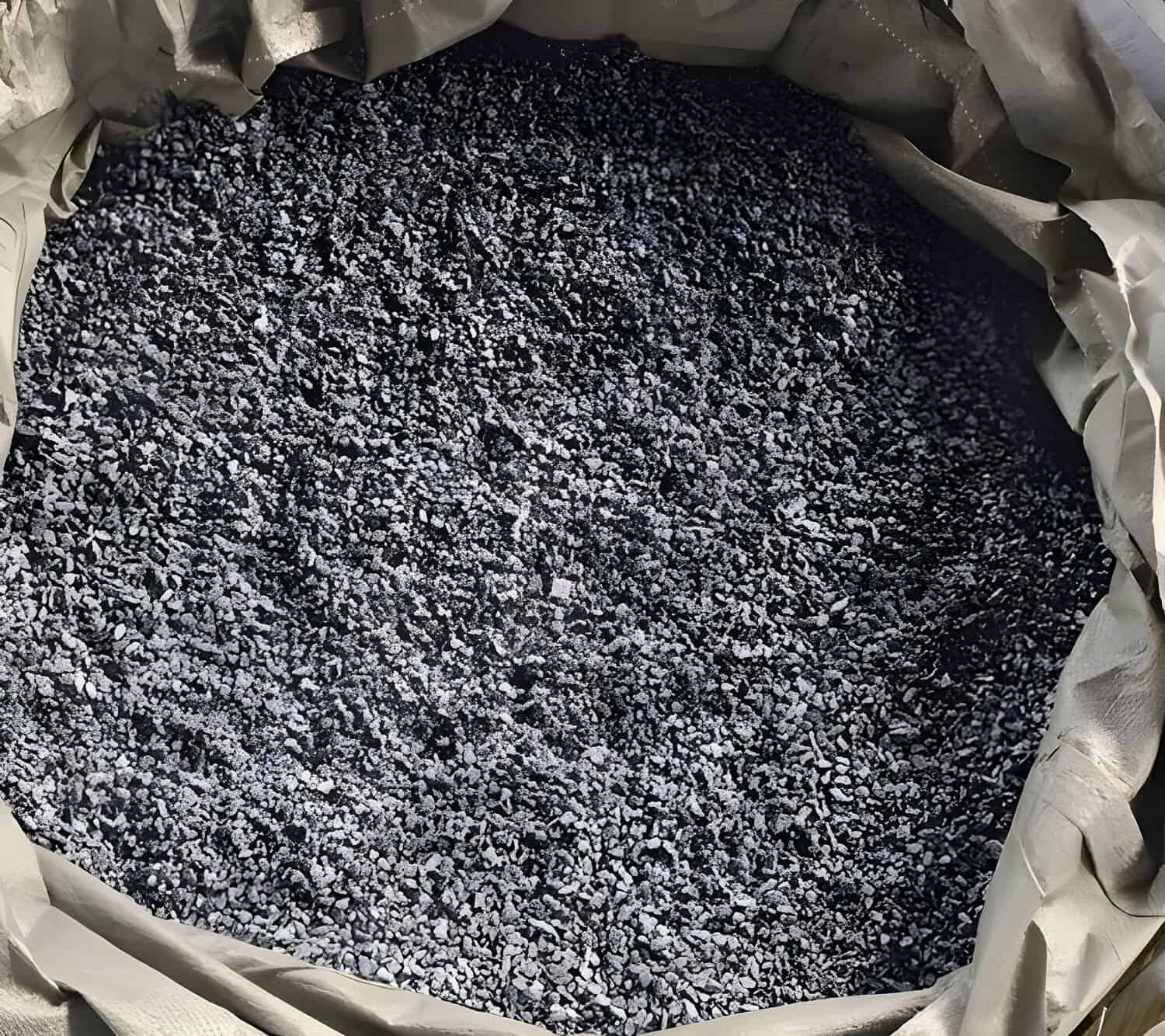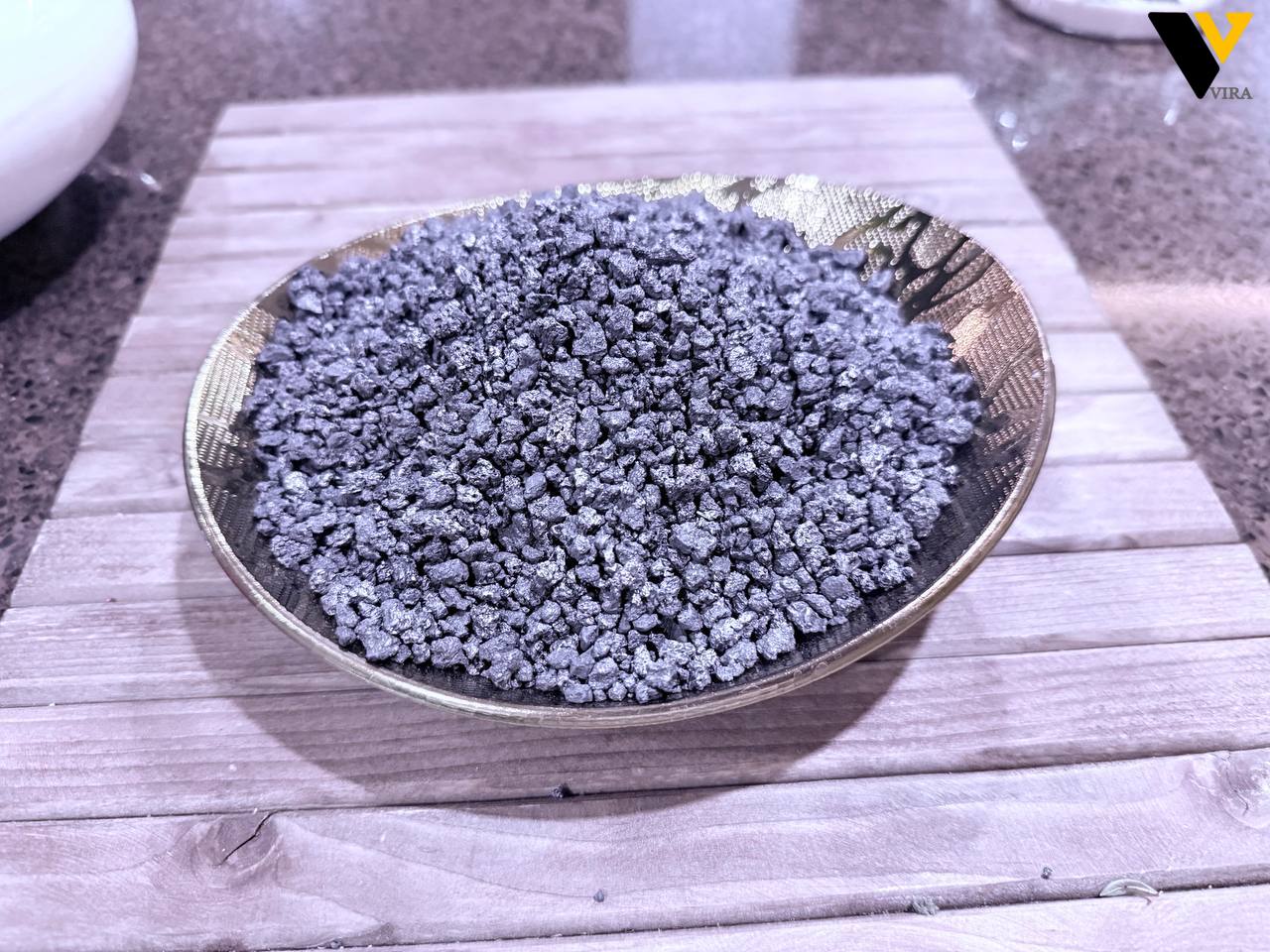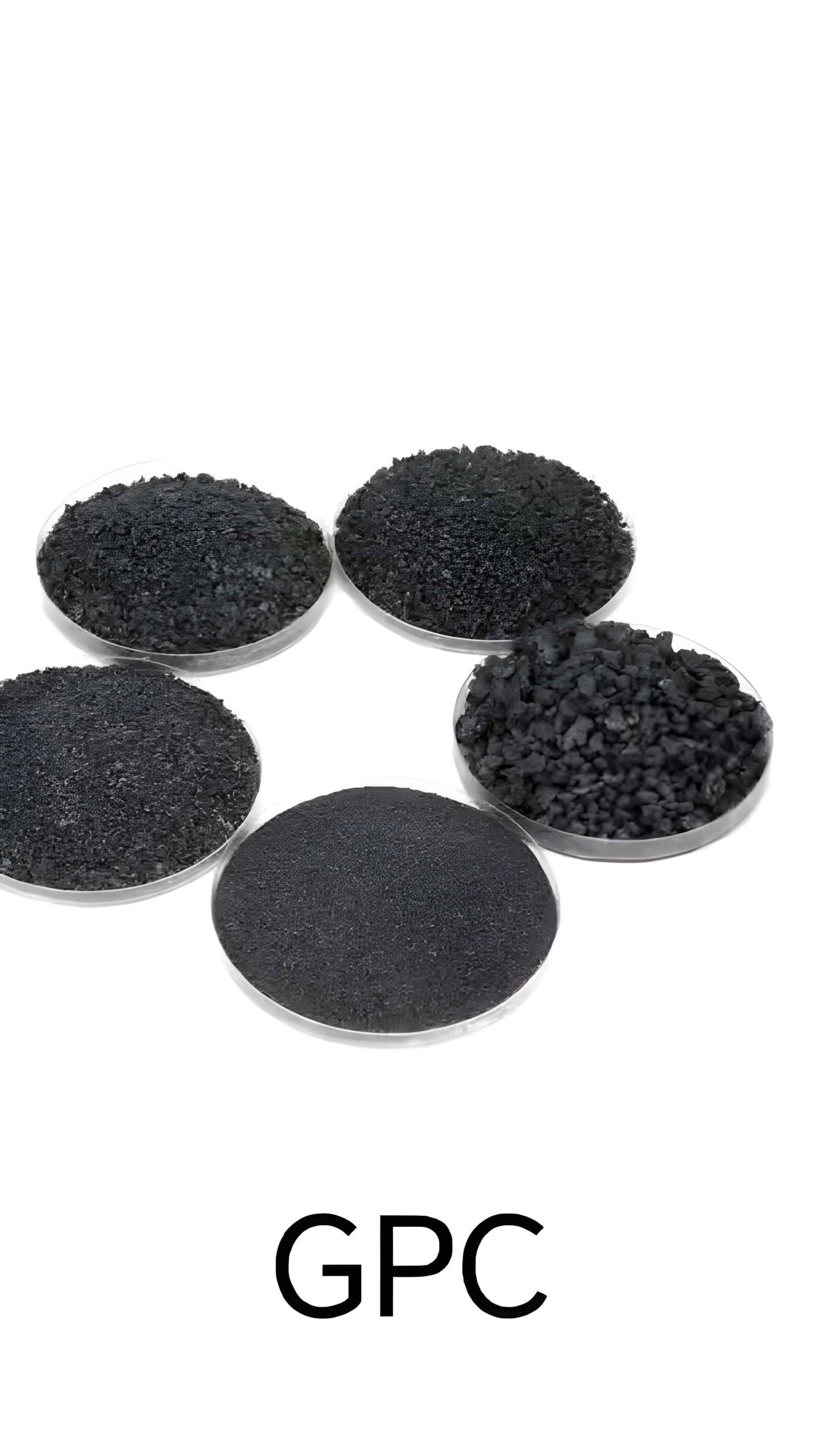


Summary: Calcined Petroleum Coke (CPC)
Premium Calcined Petroleum Coke (CPC) is a high-performance carbon feedstock derived from green petroleum coke through precise calcination under controlled thermal conditions
The process enhances carbon purity, reduces volatiles, and improves density, conductivity, and overall material stability
With tightly managed quality parameters including sulfur, ash, moisture, and particle size distribution, premium CPC is widely used in aluminum anodes, graphite products, and advanced metallurgical applications where material consistency is essential
FERROSILICON.CO – Global Ferroalloy & Carbon Materials Export Platform
?What Is Premium Calcined Petroleum Coke (CPC)
Premium Calcined Petroleum Coke (CPC) is a high-carbon material produced by heating green petroleum coke at high temperatures under controlled conditions
This process removes moisture and volatile matter, improves density and conductivity, and creates a more stable carbon structure
Premium CPC is defined by its high fixed carbon, low impurities, controlled sulfur, low ash, and consistent quality, making it ideal for demanding applications such as aluminum anodes, steelmaking, and carbon products
:How Premium Calcined Petroleum Coke Is Produced
:Feed Preparation (Green Coke Selection & Handling)
Green petroleum coke is sourced and evaluated for key indicators (e.g., sulfur, metals, ash, moisture, and particle distribution). Consistent feed quality is essential because it directly affects final CPC performance
:Controlled High-Temperature Calcination
The green coke is heated in an oxygen-limited environment (commonly in a rotary kiln or shaft calciner) to drive off moisture and volatile hydrocarbons and to stabilize the carbon structure. Tight control of temperature profile, residence time, and air/energy balance is what differentiates premium CPC from standard grades
:Cooling, Sizing, and Quality Verification
Calcined coke is cooled carefully to minimize oxidation, then crushed/screened to meet customer size requirements. Final acceptance testing typically includes volatile matter, moisture, ash, sulfur, real density, and PSD (particle size distribution) to ensure consistent premium-grade specifications
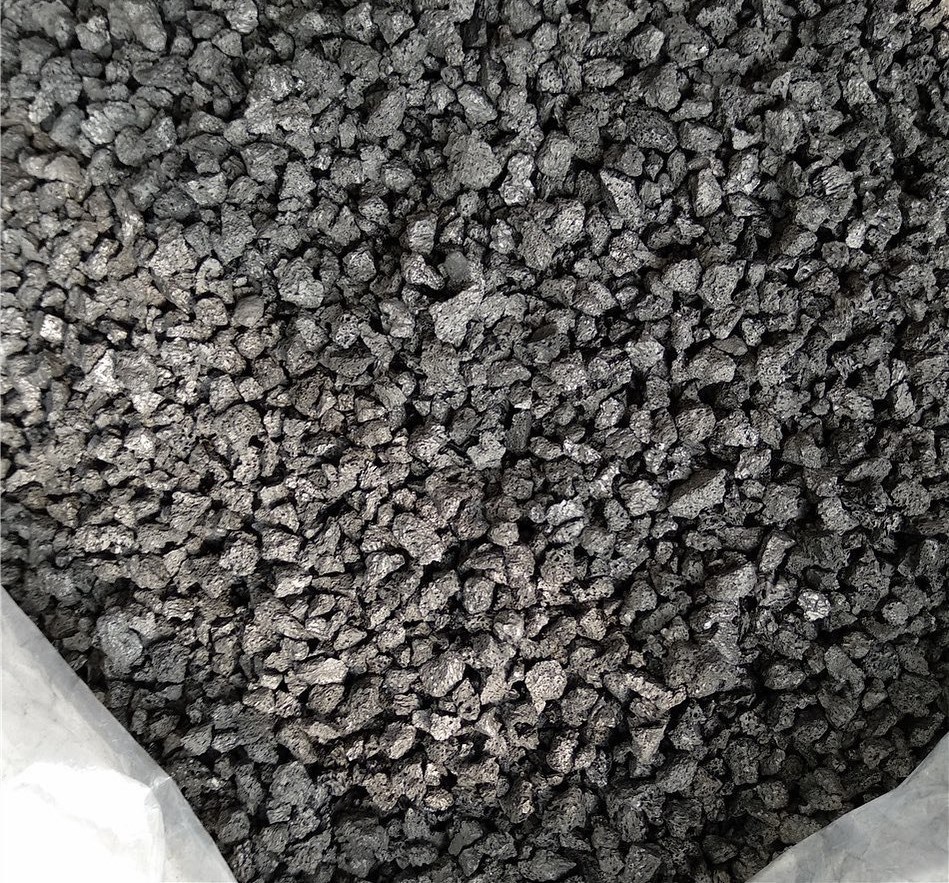
:How Premium Calcined Petroleum Coke Is Produced
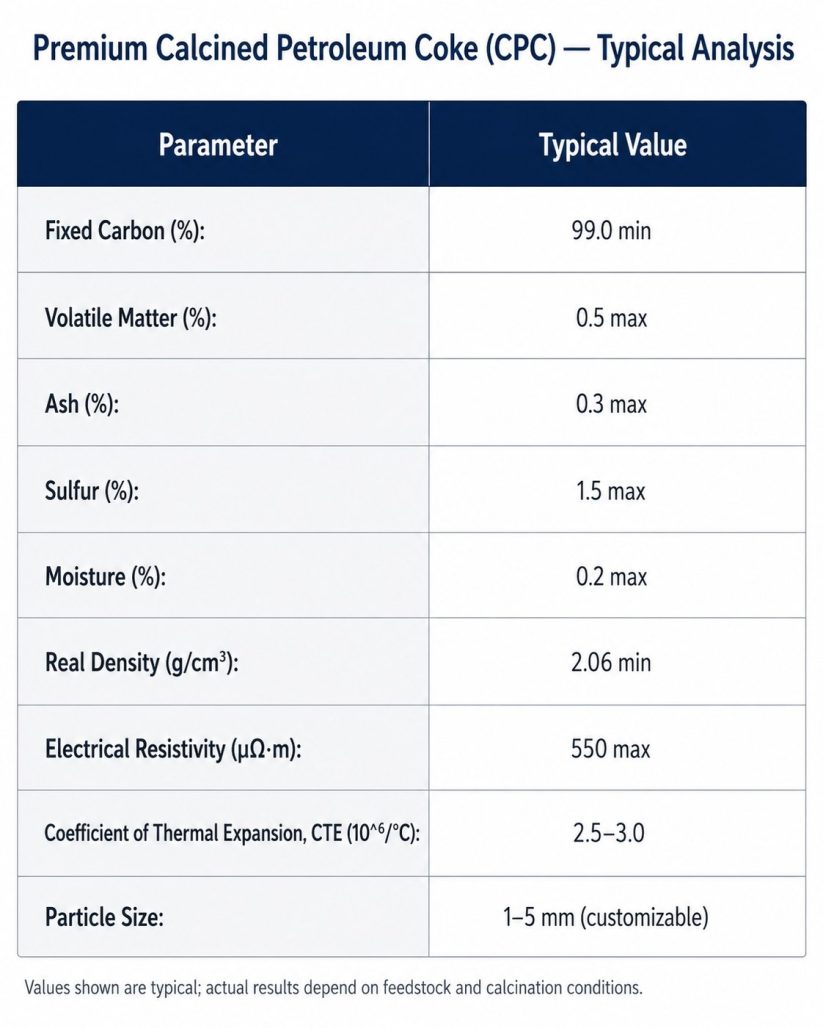
Premium CPC quality is defined by a tight control of both chemical purity and physical performance
Key indicators include high fixed carbon, low volatile matter and moisture, low ash, and controlled sulfur levels, supported by high real density as proof of effective calcination
In addition, limiting metallic impurities (such as V, Ni, and Fe) and maintaining a consistent particle size distribution are essential to ensure stable, repeatable results in demanding industrial applications
| Parameter | Typical Premium CPC Characteristic | Why It Matters |
|---|---|---|
| Fixed Carbon | High | Indicates carbon purity and overall product value |
| Volatile Matter | Low | Improves thermal stability and process consistency |
| Moisture | Very Low | Reduces handling issues and improves efficiency |
| Ash | Low | Minimizes non-carbon impurities |
| Sulfur | Controlled / Low | Critical for aluminum and metallurgical applications |
| Real Density | High | Reflects structural quality and calcination effectiveness |
| Metallic Impurities (V, Ni, Fe) | Low | Helps protect downstream product quality |
| Particle Size Distribution | Consistent / Controlled | Ensures uniform performance in industrial processes |
:Physical Properties: Density, Porosity & Particle Size Distribution
Premium CPC is typically characterized by high real/bulk density, which reflects effective calcination and a more ordered carbon structure
Porosity is closely linked to reactivity and absorption behavior; controlling it helps ensure stable performance under high-temperature operating conditions
In addition, a consistent particle size distribution (PSD) is critical for predictable flow, accurate batching, uniform mixing, and repeatable results in downstream processing
:Chemical Properties: Fixed Carbon, Sulfur, Ash & Volatile Matter
From a chemical standpoint, premium CPC targets high fixed carbon as the main indicator of carbon purity and value
Sulfur is controlled to meet application limits—especially important for sensitive uses such as aluminum anodes
Ash represents mineral impurities that can affect final product quality, while volatile matter is kept low to improve thermal stability, reduce unwanted emissions during heating, and enhance consistency in industrial performance
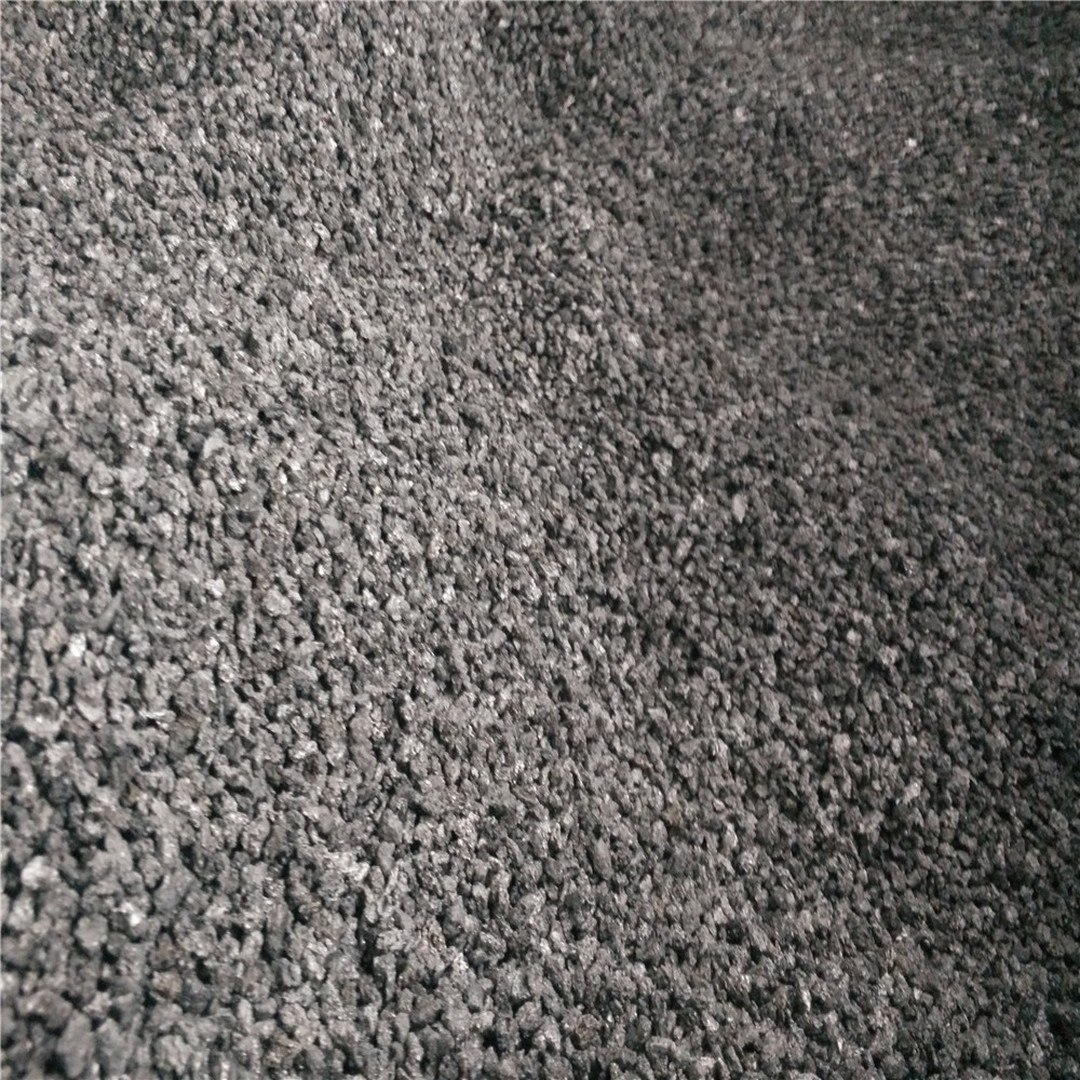
:Industrial Applications: Aluminum Anodes, Steelmaking & Carbon Products
Premium CPC is a critical carbon feedstock for prebaked anode production in the aluminum industry, where controlled sulfur/metal impurities, low volatiles, and high density support stable anode performance
In steelmaking and foundries, CPC is used as a carbon raiser (recarburizer) to adjust carbon content with predictable dissolution and low ash contribution
It is also used in carbon products (and selected graphite-related routes depending on grade), where consistent particle sizing and impurity control are essential for product reliability.
:Quality Control & Standard Testing Methods (ASTM/ISO)
Quality control is typically based on routine sampling and standardized testing of both chemistry and physical properties
Common checks include moisture, volatile matter, ash, sulfur, and fixed carbon, along with real density, particle size distribution, and sometimes electrical resistivity and metal impurity analysis (e.g., V, Ni, Fe). Using ASTM/ISO-aligned methods ensures results are comparable, repeatable, and acceptable for international supply chains
:Frequently Asked Questions (FAQ)
?What is Premium Calcined Petroleum Coke (CPC)
Premium CPC is a high-carbon material produced by calcining green petroleum coke at high temperatures under controlled conditions. It is valued for its high fixed carbon, low volatile matter, controlled sulfur, and consistent quality
?What is Premium CPC used for
It is mainly used in aluminum anode production, steelmaking, foundries, and various carbon product applications where stable carbon quality is required
? What makes CPC premium
Premium CPC is defined by tighter control over fixed carbon, sulfur, ash, moisture, volatile matter, density, and metallic impurities, along with reliable batch-to-batch consistency.
?Why is sulfur content important in CPC
Sulfur can affect downstream product performance, especially in sensitive applications such as aluminum anodes. Controlled sulfur levels help meet technical and operational requirements
?Why is real density important
Real density is a key indicator of calcination quality and carbon structure development. Higher density generally reflects better calcination and improved product stability
:Conclusion
Premium Calcined Petroleum Coke (CPC) is a strategic carbon material where both chemical purity (fixed carbon, sulfur, ash, volatile matter, metallic impurities) and physical performance (real density, porosity, particle size distribution) directly influence downstream efficiency and final product quality
Selecting a reliable premium CPC source-with consistent specifications, controlled processing, and robust QA/QC-helps reduce operational variability, improve process stability, and meet strict industrial requirements in applications such as aluminum anodes, steelmaking, and carbon products
ferrosilicon.co is a Eurasia-based producer and supplier of industrial raw materials, committed to delivering consistent-quality products for metallurgical and carbon-intensive industries
With a focus on specification control, customer-oriented sizing/packaging options, and quality verification aligned with international practices, supports clients across regional and export markets with dependable supply solutions for Premium CPC and related materials